



Polished Concrete Floors in London Offices: The Dos, Don’ts, and Professional Maintenance Cycles
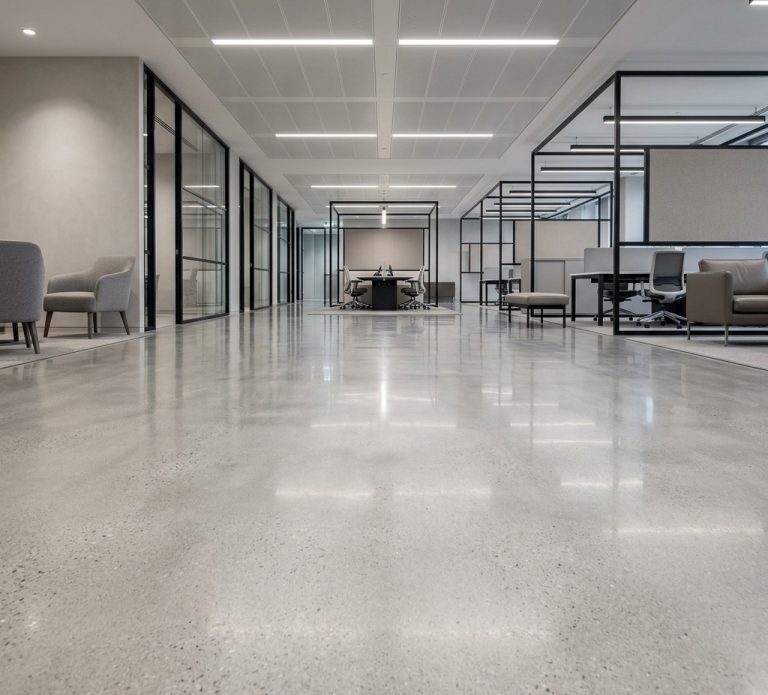
Polished concrete has spent the past decade becoming the undisputed flooring of choice for London’s design-conscious offices. Walk through Shoreditch, Bermondsey, King’s Cross, or Southwark on any given morning and you’ll find it everywhere – gleaming underfoot in converted warehouses, open-plan tech offices, boutique creative agencies, and co-working spaces that take their exposed brickwork very seriously. It is sleek, industrial, and genuinely beautiful when properly maintained. It also has a stubborn reputation for being low-maintenance that it has absolutely not earned.
The reality is this: polished concrete is a sophisticated flooring system that rewards the right care routine extravagantly and punishes the wrong one without mercy. The offices that have figured this out have floors that look as good in year five as they did on day one. The offices that haven’t tend to have floors that look tired, patchy, and faintly embarrassed by year two. The difference, almost entirely, comes down to how the floor is cleaned and maintained – and by whom.
What Polished Concrete Actually Is (And Why It Matters for Cleaning)
Before getting into the practical detail, it’s worth establishing what polished concrete actually is, because there’s a fair amount of confusion in the market and it has real consequences for maintenance decisions.
Polished concrete is not simply concrete with a shiny coating on top. It is mechanically ground and polished using progressively finer diamond abrasives until the surface reaches the desired level of reflectivity – typically measured in gloss levels from a low satin finish through to a high-definition mirror polish. During this process, a chemical densifier – usually a lithium or sodium silicate compound – is applied to harden the concrete matrix and close its pores. The result is a surface that is hard, dense, and far more resistant to staining and abrasion than raw concrete.
Some polished concrete floors also receive a topical sealer or guard product as a final layer. Some do not. This distinction matters enormously for maintenance, because the two require different cleaning chemistry and respond very differently to the wrong products.
This is, in short, a precision surface. Treat it like one.
The Dos – Maintenance That Protects Your Investment
Dust Mopping Daily, Without Fail
The single most damaging thing that happens to a polished concrete floor is not a chemical spill or a dropped chair. It’s grit. Fine particulate matter – the kind tracked in from London streets, carried on shoe soles, deposited by foot traffic – acts as a fine abrasive on the polished surface. Every step grinds it slightly. Over time, this creates a dull, scratched appearance that no amount of cleaning will reverse without professional intervention.
Daily dust mopping with a quality microfibre flat mop removes this grit before it causes damage. It takes minutes. It is, without question, the single highest-return maintenance task for any polished concrete floor.
Use pH-Neutral Cleaners, Every Time
Polished concrete is sensitive to both acid and alkali. The densifiers that harden the surface and the guard products that protect it can both be degraded by cleaning chemistry that falls outside a neutral pH range. This means no acidic cleaners – which rules out anything citrus-based, vinegar solutions, and a surprising number of general-purpose cleaners that are marketed as “natural.” It also means avoiding strongly alkaline degreasers for routine cleaning.
The correct product is a pH-neutral, non-residue cleaner specifically formulated for polished or sealed stone and concrete surfaces. These are widely available, perform well, and will not silently strip the protection from a floor that cost a considerable amount to install.
Attend to Spills Immediately
Polished concrete with a topical guard has reasonable stain resistance – but “reasonable” is doing some heavy lifting in that sentence. Oils, coloured drinks, and anything acidic (coffee is both) can penetrate or etch the surface if left to dwell. The rule is simple: spills get addressed immediately with a clean cloth and a small amount of neutral cleaner. Not when someone gets around to it. Immediately.
Schedule Professional Maintenance Regularly
More on this in detail shortly, but it belongs in the “dos” list because it is frequently overlooked until a floor has visibly deteriorated. Professional maintenance – re-application of guard products, burnishing, and periodic re-polishing where needed – is not a remedial measure. It is a scheduled part of the floor’s lifecycle, and treating it as such is what separates floors that age beautifully from floors that don’t.
The Don’ts – How Good Floors Go Wrong
Never Use Steam Mops
Steam mops are excellent on a number of flooring types. Polished concrete is not among them. The sustained heat and moisture penetrate the surface, can cause micro-cracking in the concrete matrix over time, and will degrade guard and sealer products with impressive efficiency. Steam mops are a genuinely common cause of premature polished concrete deterioration in London offices that should know better.
Avoid String Mops and Excess Water
Traditional string mops leave water sitting on the surface in uneven quantities. Standing water on polished concrete – particularly near joints, edges, or any micro-cracks – works its way into the substrate, causes moisture-related dulling, and can lift guard products from the surface over time. The correct application method is a flat microfibre mop, lightly dampened, with the floor dried promptly if needed.
Don’t Use Abrasive Pads or Scourers
It sounds obvious until you watch someone address a scuff mark on a polished concrete floor with a green scouring pad. Abrasive pads cut through the polished surface layer. Even relatively light abrasive cleaning – the kind that would be perfectly appropriate on a tiled floor – can create localised dull patches on polished concrete that require professional re-polishing to address.
Never Assume One Product Suits All Concrete Floors
This is perhaps the most important don’t of all. Polished concrete is not a monolithic category. A floor with a topical sealer behaves differently from an unsealed, guard-treated floor. An older, heavily trafficked floor has different needs from a recently installed one. Applying the wrong maintenance product – particularly a topical polish or wax intended for other hard floors – can leave a residue that attracts dirt, creates an uneven sheen, and is genuinely difficult to remove without professional help. Always establish what type of finish a floor has before selecting any product.
Professional Maintenance Cycles – The Timeline That Protects Your Floor
Routine Professional Cleaning – Every One to Three Months
For most London offices with polished concrete floors, a professional clean using an auto-scrubber with soft non-abrasive pads and a correctly dosed neutral cleaner should be scheduled every one to three months, depending on footfall. Auto-scrubbers apply and recover cleaning solution in a single controlled pass, avoiding the puddling and residue risk of manual mopping at scale. In high-traffic areas – reception floors, main corridors, open-plan zones near entrances – the more frequent end of that range is appropriate.
Re-application of Guard Product – Every Six to Twelve Months
Most polished concrete floors in commercial settings carry a guard product – a penetrating chemical treatment that fills the surface pores and resists staining. This product depletes with cleaning and foot traffic over time. Re-application by a professional using the correct product and application method every six to twelve months maintains the stain resistance and surface protection that the floor was designed to have. Skip this, and the floor is effectively unprotected well before the next scheduled re-polish.
Burnishing – Every Three to Six Months
Burnishing is the process of running a high-speed rotary machine – a burnisher – over a polished concrete floor with a very fine polishing pad. It restores surface gloss, addresses light surface scratches, and redistributes any residual guard product evenly across the floor. It is a relatively quick process for a professional team with the right equipment, and it makes a visible difference to the appearance of a floor that has begun to look slightly flat between deeper maintenance visits.
Full Re-polish – Every Three to Five Years
Even well-maintained polished concrete floors in busy office environments will eventually show wear in high-traffic zones. The shine softens, fine surface scratches accumulate, and the floor begins to look its age. A full re-polish – mechanical grinding with fine diamond pads, re-densifying if needed, and restoration to the original gloss level – reverses this and effectively resets the clock on the floor’s appearance. On a high-quality installation, this cycle can be repeated multiple times without meaningful loss of floor depth.
Knowing When Your Floor Needs Professional Attention Now
There are situations where the maintenance schedule doesn’t apply because the floor has moved beyond routine care. Visible scratching that doesn’t respond to burnishing, localised staining that has penetrated the surface, areas where the floor has gone distinctly dull while surrounding zones remain polished, or any sign of surface flaking or delamination – all of these indicate that professional assessment is needed rather than another round of routine cleaning.
Polished concrete is a resilient, genuinely long-lasting flooring choice for London offices. Maintained correctly, it performs exceptionally well for decades. The companies with the best-looking floors five years after installation are not the ones with the best concrete. They’re the ones with the best maintenance programme.…