


COSHH Compliance for London Commercial Cleaning Contractors: What Every Facilities Manager Must Verify
COSHH is one of those acronyms that sits very comfortably in facilities management vocabulary right up until the moment someone asks for specifics. Most people in the industry know it stands for Control of Substances Hazardous to Health, know in a general sense that it involves chemicals and paperwork, and could probably pick it out of a regulatory lineup. Fewer could say with confidence exactly what their cleaning contractor is legally required to have in place, what documentation they should be able to produce on request, or what the practical consequences look like when something has been missed.
This article is for that second group. COSHH compliance in commercial cleaning is not especially complicated once you understand its structure – but it is non-negotiable, it is regularly under-evidenced by contractors who really ought to know better, and it is ultimately the facilities manager’s problem when it goes wrong on their premises. Let’s go through what it actually requires, and what you should be verifying.
What COSHH Is – and Why Cleaning Is Squarely in Its Sights
The Control of Substances Hazardous to Health Regulations 2002 place a legal duty on employers to assess and control the risks arising from hazardous substances used at work. For most industries, COSHH sits in the background as a moderately relevant piece of legislation. For commercial cleaning, it is front and centre.
The reason is obvious: cleaning is a chemically intensive occupation. Disinfectants, bleach-based products, acidic descalers, solvent-based degreasers, enzyme treatments, drain cleaners, and specialist surface treatments are the everyday toolkit of a commercial cleaning operation. A number of these substances are corrosive, sensitising, or toxic at certain concentrations. Several can interact dangerously if stored or used incorrectly. And the people applying them are often working in confined spaces, using spray equipment that creates inhalable mists, and doing so across multiple premises in a single shift.
The Health and Safety Executive does not consider cleaning a low-risk activity, and neither should the facilities managers responsible for the buildings in which it takes place.
The COSHH Assessment – What It Must Actually Cover
The centrepiece of COSHH compliance is the risk assessment, which the regulations require to be “suitable and sufficient.” That phrase is doing quite a lot of work. In practice, it means the assessment must identify every hazardous substance used, consider the realistic ways in which workers could be exposed, evaluate the risk that exposure presents, and document the control measures in place to reduce that risk to an acceptable level.
For a commercial cleaning contractor, this means a separate COSHH assessment for each product in their inventory – not a single generic document covering “cleaning chemicals” as a category. A quaternary ammonium disinfectant, a sodium hypochlorite bleach solution, and a phosphoric acid descaler each present different hazard profiles, exposure routes, and control requirements. Lumping them together is not suitable, is not sufficient, and will not satisfy an HSE inspector.
The Control Hierarchy – PPE Is the Last Resort, Not the First
One of the most commonly misunderstood aspects of COSHH in cleaning is the control hierarchy. The regulations require employers to work through a prioritised sequence of control measures: eliminate the substance if possible, substitute it with something less hazardous, enclose the process to prevent exposure, apply engineering controls such as ventilation, and only then – as a last resort – rely on personal protective equipment.
This matters in practice because a great many cleaning contractors default to handing staff a pair of gloves and considering the matter resolved. Gloves are appropriate PPE and should absolutely be used. But if a particular product could be substituted with a less hazardous formulation without meaningful loss of efficacy – and in many cases it can – the regulations expect that substitution to have been considered and documented before PPE became the primary control. Facilities managers should ask to see evidence of this process, not simply a list of PPE issued.
Safety Data Sheets – The Document Every Contractor Must Hold
Every hazardous substance used by a cleaning contractor should be accompanied by a current Safety Data Sheet, or SDS – a standardised sixteen-section document provided by the manufacturer that covers the substance’s properties, hazards, safe handling requirements, storage conditions, exposure limits, first aid measures, and emergency procedures.
Safety Data Sheets are not optional background reading. They are the foundational reference document for the COSHH assessment, and they must be current – suppliers update them when formulations change or new hazard data emerges, and an SDS from 2015 may no longer accurately reflect the product being used today.
Facilities managers should verify that their contractor holds a current SDS for every product used on their premises. This is a straightforward request. Any contractor who cannot produce these documents, or who produces documents that haven’t been reviewed in several years, is operating a COSHH programme that is incomplete at its foundation.
Staff Training – What Workers Must Actually Know
A COSHH assessment sitting in a folder in a contractor’s office is not, by itself, compliance. The regulations require that workers are informed, instructed, and trained on the risks from the substances they use and the control measures in place. In practical terms, this means cleaning staff must understand what the hazardous substances in their kit actually are, what health effects exposure can cause, how to use them safely, what PPE is required and why, and what to do in the event of an accidental spill, splash, or ingestion.
This is worth scrutinising carefully, because COSHH training in cleaning is an area where the gap between what contractors claim and what workers actually know can be substantial. A laminated sheet on the cleaning trolley does not constitute training. A signature on an induction checklist from three years ago is not sufficient for a worker now using a different product range on a different contract.
Dermatitis and Occupational Asthma – The Real Risks at Stake
It’s worth pausing on why the training requirement exists, because the health consequences of inadequate COSHH control in cleaning are genuine and well-documented. Occupational contact dermatitis – skin damage caused by repeated exposure to cleaning chemicals, particularly wet work and detergent contact – is one of the most prevalent occupational illnesses in the UK. Occupational asthma caused by sensitisation to spray cleaning products, particularly certain disinfectants and fragranced formulations, is a recognised and serious condition.
These are not theoretical risks dressed up in regulatory language. They are conditions that end careers. A cleaning operative who develops chemical sensitisation may find they cannot work with entire categories of product for the remainder of their working life. The COSHH framework exists to prevent this – and when it fails, it fails real people.
Storage, Labelling, and Segregation on Your Premises
COSHH compliance extends to how cleaning chemicals are stored in the buildings where they are used. This is an area where facilities managers have direct oversight and direct responsibility, regardless of whether the cleaning operation is outsourced.
Chemicals must be stored in their original, correctly labelled containers – not decanted into unlabelled bottles or repurposed food containers, which sounds like an obvious point until you check the cleaning cupboard on your fourth floor. Products that react dangerously with one another – bleach and acidic descalers being the classic example, which together produce chlorine gas with cheerful efficiency – must be segregated in storage. Quantities on site should be limited to what is reasonably needed for the work in hand, and storage areas should be secure, ventilated, and clearly signed.
Facilities managers should walk their cleaning storage areas periodically. What you find there tells you a great deal about the rigour of a contractor’s COSHH programme in practice rather than on paper.
Health Surveillance – When It Is Required and What It Involves
For certain categories of substance and exposure, COSHH requires employers to put health surveillance in place for affected workers. In a commercial cleaning context, this is most relevant where staff are regularly exposed to substances known to cause occupational asthma or dermatitis – which, given the product ranges involved, covers a meaningful portion of the industry.
Health surveillance in this context does not necessarily mean full medical examinations. For skin conditions, it can involve structured self-checks supported by management review, with escalation to occupational health when symptoms are identified. For respiratory risks, more formal spirometry testing may be appropriate. The important point is that a system exists, that it is documented, and that it is actually used – not simply listed in a COSHH policy as something the contractor “may implement where required.”
What Facilities Managers Should Be Asking For – and Verifying
Bringing this together into practical terms, here is what a facilities manager should expect to be able to verify from any commercial cleaning contractor operating on their premises.
A complete, product-specific COSHH assessment file, reviewed within the past twelve months or whenever the product range changes. Current Safety Data Sheets for every product in use on site. Evidence of COSHH training for all staff deployed to the contract, with records of when that training was delivered and refreshed. Documented PPE provision with evidence that the control hierarchy was worked through before PPE became the primary measure. Clear chemical storage arrangements on site that comply with segregation and labelling requirements. And, where relevant, a health surveillance protocol with records of how it is being implemented.
None of this is bureaucratic excess. COSHH enforcement by the HSE can result in improvement notices, prohibition notices, and prosecution. More significantly, a COSHH failure that results in a worker’s injury on your premises involves your organisation in liability questions that no facilities manager wants to be answering. The verification steps above are not onerous to request. A contractor who is genuinely compliant will produce this documentation without hesitation.
One who hesitates at length is telling you something important.…
Polished Concrete Floors in London Offices: The Dos, Don’ts, and Professional Maintenance Cycles
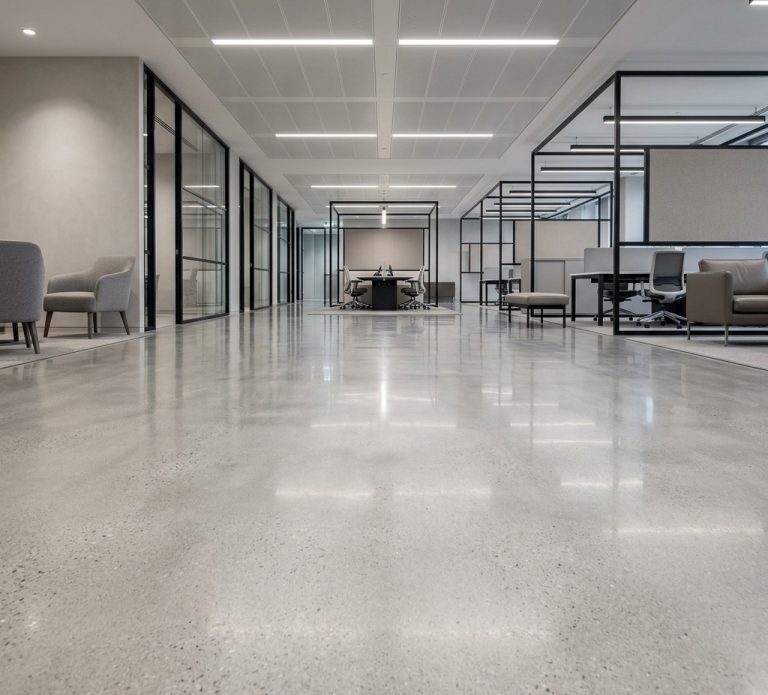
Polished concrete has spent the past decade becoming the undisputed flooring of choice for London’s design-conscious offices. Walk through Shoreditch, Bermondsey, King’s Cross, or Southwark on any given morning and you’ll find it everywhere – gleaming underfoot in converted warehouses, open-plan tech offices, boutique creative agencies, and co-working spaces that take their exposed brickwork very seriously. It is sleek, industrial, and genuinely beautiful when properly maintained. It also has a stubborn reputation for being low-maintenance that it has absolutely not earned.
The reality is this: polished concrete is a sophisticated flooring system that rewards the right care routine extravagantly and punishes the wrong one without mercy. The offices that have figured this out have floors that look as good in year five as they did on day one. The offices that haven’t tend to have floors that look tired, patchy, and faintly embarrassed by year two. The difference, almost entirely, comes down to how the floor is cleaned and maintained – and by whom.
What Polished Concrete Actually Is (And Why It Matters for Cleaning)
Before getting into the practical detail, it’s worth establishing what polished concrete actually is, because there’s a fair amount of confusion in the market and it has real consequences for maintenance decisions.
Polished concrete is not simply concrete with a shiny coating on top. It is mechanically ground and polished using progressively finer diamond abrasives until the surface reaches the desired level of reflectivity – typically measured in gloss levels from a low satin finish through to a high-definition mirror polish. During this process, a chemical densifier – usually a lithium or sodium silicate compound – is applied to harden the concrete matrix and close its pores. The result is a surface that is hard, dense, and far more resistant to staining and abrasion than raw concrete.
Some polished concrete floors also receive a topical sealer or guard product as a final layer. Some do not. This distinction matters enormously for maintenance, because the two require different cleaning chemistry and respond very differently to the wrong products.
This is, in short, a precision surface. Treat it like one.
The Dos – Maintenance That Protects Your Investment
Dust Mopping Daily, Without Fail
The single most damaging thing that happens to a polished concrete floor is not a chemical spill or a dropped chair. It’s grit. Fine particulate matter – the kind tracked in from London streets, carried on shoe soles, deposited by foot traffic – acts as a fine abrasive on the polished surface. Every step grinds it slightly. Over time, this creates a dull, scratched appearance that no amount of cleaning will reverse without professional intervention.
Daily dust mopping with a quality microfibre flat mop removes this grit before it causes damage. It takes minutes. It is, without question, the single highest-return maintenance task for any polished concrete floor.
Use pH-Neutral Cleaners, Every Time
Polished concrete is sensitive to both acid and alkali. The densifiers that harden the surface and the guard products that protect it can both be degraded by cleaning chemistry that falls outside a neutral pH range. This means no acidic cleaners – which rules out anything citrus-based, vinegar solutions, and a surprising number of general-purpose cleaners that are marketed as “natural.” It also means avoiding strongly alkaline degreasers for routine cleaning.
The correct product is a pH-neutral, non-residue cleaner specifically formulated for polished or sealed stone and concrete surfaces. These are widely available, perform well, and will not silently strip the protection from a floor that cost a considerable amount to install.
Attend to Spills Immediately
Polished concrete with a topical guard has reasonable stain resistance – but “reasonable” is doing some heavy lifting in that sentence. Oils, coloured drinks, and anything acidic (coffee is both) can penetrate or etch the surface if left to dwell. The rule is simple: spills get addressed immediately with a clean cloth and a small amount of neutral cleaner. Not when someone gets around to it. Immediately.
Schedule Professional Maintenance Regularly
More on this in detail shortly, but it belongs in the “dos” list because it is frequently overlooked until a floor has visibly deteriorated. Professional maintenance – re-application of guard products, burnishing, and periodic re-polishing where needed – is not a remedial measure. It is a scheduled part of the floor’s lifecycle, and treating it as such is what separates floors that age beautifully from floors that don’t.
The Don’ts – How Good Floors Go Wrong
Never Use Steam Mops
Steam mops are excellent on a number of flooring types. Polished concrete is not among them. The sustained heat and moisture penetrate the surface, can cause micro-cracking in the concrete matrix over time, and will degrade guard and sealer products with impressive efficiency. Steam mops are a genuinely common cause of premature polished concrete deterioration in London offices that should know better.
Avoid String Mops and Excess Water
Traditional string mops leave water sitting on the surface in uneven quantities. Standing water on polished concrete – particularly near joints, edges, or any micro-cracks – works its way into the substrate, causes moisture-related dulling, and can lift guard products from the surface over time. The correct application method is a flat microfibre mop, lightly dampened, with the floor dried promptly if needed.
Don’t Use Abrasive Pads or Scourers
It sounds obvious until you watch someone address a scuff mark on a polished concrete floor with a green scouring pad. Abrasive pads cut through the polished surface layer. Even relatively light abrasive cleaning – the kind that would be perfectly appropriate on a tiled floor – can create localised dull patches on polished concrete that require professional re-polishing to address.
Never Assume One Product Suits All Concrete Floors
This is perhaps the most important don’t of all. Polished concrete is not a monolithic category. A floor with a topical sealer behaves differently from an unsealed, guard-treated floor. An older, heavily trafficked floor has different needs from a recently installed one. Applying the wrong maintenance product – particularly a topical polish or wax intended for other hard floors – can leave a residue that attracts dirt, creates an uneven sheen, and is genuinely difficult to remove without professional help. Always establish what type of finish a floor has before selecting any product.
Professional Maintenance Cycles – The Timeline That Protects Your Floor
Routine Professional Cleaning – Every One to Three Months
For most London offices with polished concrete floors, a professional clean using an auto-scrubber with soft non-abrasive pads and a correctly dosed neutral cleaner should be scheduled every one to three months, depending on footfall. Auto-scrubbers apply and recover cleaning solution in a single controlled pass, avoiding the puddling and residue risk of manual mopping at scale. In high-traffic areas – reception floors, main corridors, open-plan zones near entrances – the more frequent end of that range is appropriate.
Re-application of Guard Product – Every Six to Twelve Months
Most polished concrete floors in commercial settings carry a guard product – a penetrating chemical treatment that fills the surface pores and resists staining. This product depletes with cleaning and foot traffic over time. Re-application by a professional using the correct product and application method every six to twelve months maintains the stain resistance and surface protection that the floor was designed to have. Skip this, and the floor is effectively unprotected well before the next scheduled re-polish.
Burnishing – Every Three to Six Months
Burnishing is the process of running a high-speed rotary machine – a burnisher – over a polished concrete floor with a very fine polishing pad. It restores surface gloss, addresses light surface scratches, and redistributes any residual guard product evenly across the floor. It is a relatively quick process for a professional team with the right equipment, and it makes a visible difference to the appearance of a floor that has begun to look slightly flat between deeper maintenance visits.
Full Re-polish – Every Three to Five Years
Even well-maintained polished concrete floors in busy office environments will eventually show wear in high-traffic zones. The shine softens, fine surface scratches accumulate, and the floor begins to look its age. A full re-polish – mechanical grinding with fine diamond pads, re-densifying if needed, and restoration to the original gloss level – reverses this and effectively resets the clock on the floor’s appearance. On a high-quality installation, this cycle can be repeated multiple times without meaningful loss of floor depth.
Knowing When Your Floor Needs Professional Attention Now
There are situations where the maintenance schedule doesn’t apply because the floor has moved beyond routine care. Visible scratching that doesn’t respond to burnishing, localised staining that has penetrated the surface, areas where the floor has gone distinctly dull while surrounding zones remain polished, or any sign of surface flaking or delamination – all of these indicate that professional assessment is needed rather than another round of routine cleaning.
Polished concrete is a resilient, genuinely long-lasting flooring choice for London offices. Maintained correctly, it performs exceptionally well for decades. The companies with the best-looking floors five years after installation are not the ones with the best concrete. They’re the ones with the best maintenance programme.…
Commercial Cleaning in Westminster: Security Clearances, Government Premises, and Professional Standards
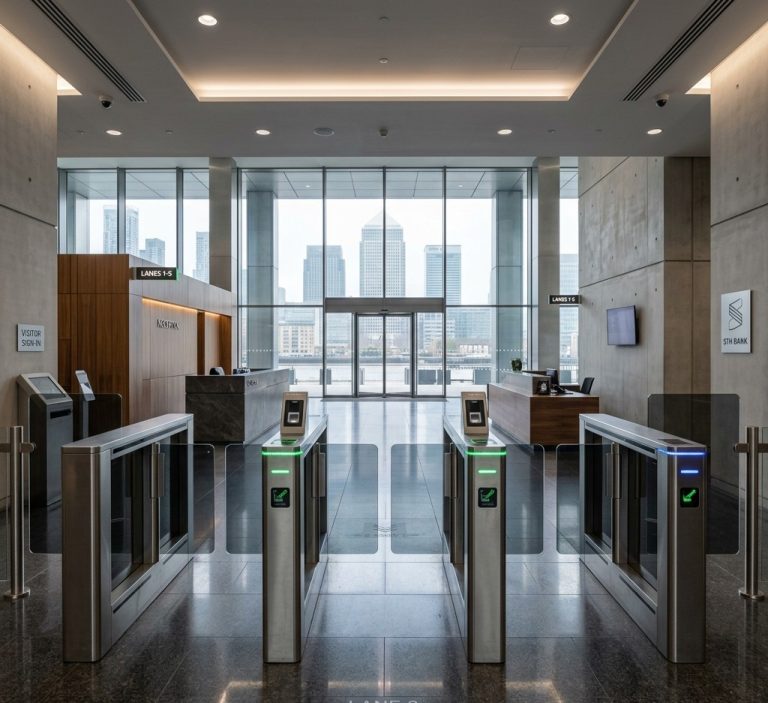
Westminster is not simply a postcode. It is the engine room of British public life – home to Parliament, Whitehall, the Cabinet Office, the Foreign Commonwealth and Development Office, more embassies than you could shake a diplomatic passport at, and enough Grade I listed buildings to make an architect weep with quiet joy. Cleaning here is categorically different from cleaning a tech start-up in Shoreditch or a law firm in Canary Wharf. The stakes are higher, the access protocols are stricter, and the person emptying the bin in a ministerial office may well hold a security clearance that their colleagues elsewhere in the industry find mildly extraordinary.
This article covers what commercial cleaning in Westminster actually involves – from the vetting procedures that cleaning staff must pass, to the specific professional standards that government premises demand, and why choosing the right contractor for this part of London warrants considerably more thought than most.
Westminster Is Not Like Everywhere Else
There’s a reason Yes Minister has never been successfully remade as a light-hearted comedy set in a regional council office somewhere in the Midlands. Westminster operates at a different altitude. Within roughly one square mile, you’ll find the Houses of Parliament, Downing Street, the Treasury, the Home Office, the Ministry of Defence, and New Scotland Yard. The buildings range from Victorian Gothic to brutalist concrete to sleek modern offices, often within the same street. The organisations they house range from global diplomatic missions to departments processing classified intelligence assessments.
This concentration of sensitive, high-security, historically significant buildings creates a cleaning environment genuinely unlike anywhere else in Greater London – or, frankly, anywhere else in the country.
The Security Dimension That Changes Everything
Let’s be direct about this. Cleaning staff working in Westminster government premises are not simply people with mops and a positive attitude. They are, in a very real sense, part of the security ecosystem of those buildings. A cleaner working after hours in a government department has unsupervised access to offices, desks, and spaces that are firmly off-limits to the general public. That access carries real responsibility – and that responsibility comes with formal process.
Security Clearances – What They Actually Involve
The term “security clearance” gets used rather loosely, so it’s worth being precise about what it means in practice for commercial cleaning staff working on government contracts.
The baseline for most government cleaning work is the Baseline Personnel Security Standard, known as BPSS. This is the minimum vetting level required for anyone accessing government premises, assets, or information – even in a cleaning capacity. BPSS checks cover identity verification, right to work in the UK, a three-year employment history, and a basic criminal record check.
For contracts involving more sensitive premises – certain Ministry of Defence facilities, intelligence-adjacent buildings, or areas where classified material may be present – the requirements escalate. Counter Terrorist Check clearance, known as CTC, covers a five-year employment history alongside nationality, immigration, and security service checks. Developed Vetting – the highest level – is relatively uncommon for cleaning staff but not unheard of in the most sensitive environments.
The Contractor’s Responsibility in the Vetting Process
Here’s where things get genuinely demanding from a contractor’s perspective. It isn’t simply the case that individual cleaners obtain clearances and then deploy wherever they’re needed. Government cleaning contracts place significant responsibility on the contractor to manage, maintain, and document the vetting status of every member of staff allocated to that contract.
This means rigorous record-keeping. It means clear protocols for what happens when a cleared member of staff leaves and must be replaced – because you cannot send an unvetted substitute at six in the morning and expect the building’s security team to wave them through with a smile. It means understanding that clearance timelines can stretch to several weeks, and planning staffing around that reality rather than against it. Cleaning companies operating across Greater London that pick up a government contract without the right infrastructure already in place tend to discover this the hard way.
What Government Premises Actually Demand
Security vetting is the most visible requirement for Westminster cleaning contracts, but it is far from the only one. Government premises – and particularly the older, historically significant buildings that make up a large portion of the Westminster estate – come with practical and professional demands that go well beyond standard commercial cleaning.
Heritage Buildings and the Rules That Come With Them
A significant proportion of Westminster’s government buildings are listed. Cleaning listed buildings is not the same as cleaning a modern office block, and treating them as though it were is a fast route to causing irreversible damage. Certain cleaning products are restricted or prohibited on sensitive stone, tile, or aged woodwork. Pressure washing, specific chemical treatments, and some mechanical cleaning methods can damage historic surfaces in ways that Historic England and the relevant preservation bodies take an extremely dim view of.
Professional contractors working in Westminster need to understand conservation-grade cleaning principles – which materials require specialist products, which surfaces should only ever be cleaned by hand with particular techniques, and crucially, when to call in a specialist conservator rather than proceed with standard methods. This is knowledge that separates contractors who genuinely understand the Westminster environment from those who have simply won a tender.
Out-of-Hours Working and Operational Constraints
Government offices are, almost without exception, cleaned outside standard working hours. Early mornings before staff arrive, evenings after buildings are cleared, and weekends where access is permitted. This is a practical consequence of working in environments where operational security requires that cleaning takes place when sensitive work is not actively under way.
For contractors, this means managing staff across unsociable hours, maintaining quality standards in the absence of client personnel, and ensuring that access protocols – key management, sign-in procedures, escort requirements in restricted areas – are followed precisely every single time. Not approximately. Every time.
There is also the matter of what happens when something goes wrong at half five in the morning in a government building. A broken fitting, an accidentally displaced document, a cleaning product spilled near a workstation – these situations demand clear incident reporting procedures and professional composure from a contractor whose protocols were established well before the moment required them. The phrase “we’ll sort it Monday” does not tend to land well in these environments.
Professional Standards That Westminster Contracts Demand
Beyond security and heritage considerations, the professional standards expected of commercial cleaning contractors on Westminster government contracts are, without qualification, higher than average. This reflects both the public accountability dimension of government procurement and the reputational stakes involved for all parties.
ISO Accreditations and Industry Memberships
Reputable contractors working on government premises will typically hold ISO 9001 for quality management and ISO 14001 for environmental management – both independently audited certifications that demonstrate a contractor’s ability to deliver consistent, documented, and continuously improving services at scale.
Membership of the British Institute of Cleaning Science (BICSc) and compliance with the Contractors Health and Safety Assessment Scheme (CHAS) are similarly standard expectations for serious operators in this space. Government procurement teams treat these as a baseline, not a differentiator.
Staff Training and Conduct Standards
The conduct expected of cleaning staff in government buildings extends well beyond doing the job competently. Discretion is non-negotiable. Staff working in ministerial offices, parliamentary buildings, or diplomatic premises will inevitably encounter sensitive correspondence, overhear conversations, or observe situations that have no business in the public domain.
Professional contractors working in Westminster invest seriously in training that covers not only cleaning technique but workplace discretion, information awareness, and appropriate conduct in high-security environments. Nobody is polishing the silverware after a state banquet – but the principle holds across every contract in this area. The people cleaning these buildings represent their employer, and by extension their client, in environments where discretion and professional conduct carry genuine consequences.
Choosing the Right Contractor for Westminster Work
The selection criteria for a commercial cleaning contractor in Westminster are necessarily more involved than for most other parts of Greater London. Technical cleaning capability is the assumed starting point, not the distinguishing factor. The questions that actually separate contractors in this space are far more specific.
Does the contractor have an established vetting pipeline and a dedicated compliance function? Can they demonstrate verifiable experience on comparable government or diplomatic contracts? Do they understand the conservation requirements of listed buildings? Are their management systems independently accredited? Do they have documented, tested protocols for incident reporting, access management, and emergency staffing?
In Westminster – where the buildings are older, the information is more sensitive, the access is more restricted, and the scrutiny is more intense than almost anywhere else in London – these are the practical foundations of a cleaning operation that can actually deliver what government clients need. Westminster sets a high bar. The contractors who work here consistently are the ones who understood that long before they ever submitted a tender.…
The Hidden Germ Geography of a London Office: Desks, Handles, and the Forgotten Keyboard Problem
Here’s an honest but not a particularly popular opinion: your London office is far dirtier than it looks, almost certainly dirtier than you’d care to think about over your morning coffee, and the worst offenders are not the ones you’d guess. It’s not the bathroom. It’s not the bin. It’s the surfaces you touch dozens of times a day without a second thought – the keyboard you’ve been typing on since Tuesday, the door handle you grabbed on the way in, the kettle in the break room that approximately forty people have touched since it was last properly wiped down.
London offices carry their own particular hygiene challenges. High footfall, open-plan layouts, shared facilities, and a workforce that commutes via one of the world’s busiest underground networks before settling in at a desk for eight hours. The microbial geography of a typical London workplace is, to put it scientifically, quite something. Let’s take a tour.
The Myth of the “Clean Enough” Office
There’s a comfortable assumption that many workplaces operate on, which goes roughly like this: if it looks tidy, it probably is tidy. Bins emptied, floors hoovered, surfaces wiped – job done. This is what hygiene professionals sometimes call “surface theatre”: cleaning that performs cleanliness rather than actually achieving it.
The reality, backed by a fairly sobering body of research, is rather different. Studies of shared workspaces consistently find bacterial counts on common office surfaces that would raise the eyebrows of anyone with even a passing interest in microbiology. The issue isn’t always the absence of cleaning – it’s cleaning that addresses the visible while leaving the genuinely problematic surfaces largely untouched.
London offices amplify this problem considerably. Open-plan environments mean more people sharing more surfaces. Flexible working arrangements and high staff turnover introduce more transient users with no particular attachment to the spaces they occupy. And the sheer density of daily activity – meetings, deliveries, visitors, contractors – keeps the bacterial refresh rate relentless.
Why Visual Cleanliness Is a Poor Proxy for Hygiene
A polished desk looks clean. Under laboratory conditions, that same desk can harbour thousands of colony-forming units per square centimetre – and that’s before lunch. Bacteria are entirely indifferent to aesthetics. A surface can be free of visible marks, crumbs, and spillages while still being thoroughly colonised by microorganisms that no amount of tidying will shift.
This is the central problem with visual-only cleaning standards: they measure the wrong thing. What matters isn’t whether a surface looks clean – it’s whether it’s been properly sanitised. These are two very different outcomes, and conflating them is where many office cleaning programmes quietly fall apart.
Desk Archaeology – What’s Actually Living on Your Workspace
Few pieces of workplace trivia land with quite the impact of this one: multiple studies have found that the average office desk carries significantly more bacteria per square inch than a toilet seat. This tends to produce one of two reactions – immediate disbelief, or an equally immediate desire to work from home permanently. Both are understandable.
The reasons are straightforward once you consider them. Toilet seats are cleaned regularly and used briefly for a single purpose. Desks, by contrast, are in near-continuous use, rarely deep-cleaned, and treated as personal territory where normal hygiene instincts somehow don’t apply. People eat at them, sneeze near them, place bags and phones on them, and spend the better part of eight hours in direct physical contact with them every working day.
The Lunchtime Contamination Cycle
Al-desko dining is effectively the national pastime of the London office worker. A sandwich from Pret, a pasta pot from the canteen, the occasional optimistic attempt at a salad – all consumed at the keyboard, often while simultaneously answering emails. The hygiene consequences are considerable.
Food debris provides the nutrients bacteria need to multiply. Moisture from drinks creates the conditions they prefer. And because desks are rarely sanitised between the morning clean and the following day, any contamination introduced at lunch has the entire afternoon and evening to establish itself. By the time the cleaning crew arrives the following morning, a thriving little ecosystem may already be well under way.
Personal Items and the “My Desk, My Rules” Problem
The desk surface is only part of the story. The items placed on it tell the rest. A mobile phone picked up and set down dozens of times daily, accumulating contact contamination with every surface it touches. A reusable coffee cup that’s been in a bag, on a Tube seat, and on three different surfaces before arriving at the office. A handbag placed directly on the desk after a journey on the Central line – which is, for what it’s worth, a long, warm, enclosed environment that functions with remarkable efficiency as a bacterial distribution network.
Personal ownership of a workspace, real or perceived, tends to reduce hygiene vigilance rather than increase it. The logic runs roughly: it’s my space, I know what’s there. Unfortunately, the bacteria occupying that space are not especially interested in that arrangement.
Handle With Care – The Touch-Point Trail Across Your Office
Beyond the desk, there’s an invisible journey that pathogens make across a typical office each day, hopping from surface to surface via the most mundane route imaginable: hands. Door handles, lift buttons, light switches, printer touchscreens, kettle handles, kitchen tap faucets – these are what hygiene specialists call fomites, or inanimate objects capable of transferring infection between people.
The problem with these surfaces isn’t that they’re particularly filthy in isolation. It’s the combination of high-volume contact and infrequent cleaning. A door handle touched by sixty people before lunch is a very different hygiene proposition from one touched by three. In a busy London office, the former is far more common than most facilities managers would comfortably assume.
The Kitchen and Break Room – A Microbial Social Club
If the desk is the office’s primary germ hotspot, the kitchen runs it a very close second. Shared sponges – which microbiologists have described as among the most bacteria-laden objects found in any indoor environment – the fridge door handle, the microwave keypad, and communal utensil drawers all present hygiene risks that routine cleaning tends to underserve.
The fridge deserves a specific mention. Cold does not mean sterile. A fridge shared by an entire floor of employees, where containers are moved, surfaces touched, and spillages addressed with varying degrees of enthusiasm, is a microbial environment that benefits enormously from regular, thorough attention rather than a fortnightly wipe of the visible shelves.
The Forgotten Keyboard Problem – Why IT Equipment Is in a Hygiene Blind Spot
Here is where things get genuinely uncomfortable. Keyboards, computer mice, desk phones, and monitor bezels are among the most-touched surfaces in any office. They are also, consistently and across almost every workplace cleaning programme, among the least thoroughly cleaned. Some aren’t meaningfully cleaned at all.
The reasons are partly a technical reluctance – there’s an understandable hesitation around applying liquid near electronics – and partly a quiet jurisdictional grey area between facilities management and IT. Nobody is entirely sure who owns the keyboard problem, so it persists, accumulating bacteria between the keycaps with impressive efficiency.
Research into keyboard contamination has produced findings worth repeating. Studies have recovered pathogens including E. coli and Staphylococcus aureus from office keyboards. One study found keyboards harbouring bacterial levels sufficient to be classified as a health hazard. The detail that tends to resonate most: traces of food debris, skin cells, and biological matter found deep between the keys of machines that looked, on the surface, perfectly presentable.
Hot-Desking and the Keyboard Lottery
Hot-desking has become the defining feature of the post-pandemic London office. Flexible, efficient, and – from a hygiene standpoint – genuinely problematic. Every new user brings their own microbial profile to a keyboard that may not have been sanitised since it arrived in the building.
“Agile working” is a fine aspiration. A keyboard used by six different people in a single week, with no cleaning between users, is a less fine reality. In practical terms, hot-desking has transformed shared peripherals from a modest hygiene consideration into a pressing one.
How to Actually Clean Tech Without Destroying It
The good news is that cleaning keyboards, mice, and desk phones properly is neither complicated nor hazardous to the equipment – provided the right products and methods are used. Isopropyl alcohol wipes at 70% concentration are the industry standard for electronic surfaces: effective against a broad spectrum of bacteria and viruses, fast-drying, and safe for most plastic and rubber components.
Compressed air clears debris from between keys before sanitising begins. Screen-safe wipes handle monitor bezels and touchscreens. The single most important rule: nothing wet near ports or ventilation slots. Beyond that, the process is straightforward, and the difference in bacterial load between a properly sanitised keyboard and an untouched one is significant.
Building a Smarter Cleaning Strategy for London Offices
Understanding where contamination actually lives in an office – as opposed to where it is assumed to be – is the foundation of any genuinely effective cleaning programme. The distinction between maintenance cleaning and deep cleaning matters considerably here. Daily cleaning keeps a space presentable; a structured deep-clean programme with scheduled attention to touch-points, tech surfaces, and kitchen equipment is what actually manages bacterial load over time.
Touch-point schedules deserve particular attention in high-footfall environments. Identifying the most frequently contacted surfaces in a given office – which will vary by layout, headcount, and working patterns – and ensuring those surfaces receive targeted, regular sanitisation is a straightforward measure with a meaningful impact on overall hygiene.
What to Ask Your Office Cleaning Contractor
Not all commercial cleaning services are built the same way, and the difference between a genuinely thorough programme and surface theatre often comes down to specifics. It is worth establishing clearly whether touch-point cleaning is included in the standard scope, what products and methods are used on IT equipment, how kitchen appliances and communal surfaces are treated, and how frequently deep-cleaning is scheduled alongside routine maintenance visits.
These are reasonable, practical questions. The answers reveal quickly whether a cleaning programme has been designed around how an office is actually used – or simply around how it looks at the end of a shift.
London Office Germ Hotspots – Ranked by Bacterial Risk
- Shared keyboards and computer mice
- Desk surfaces (especially al-desko dining areas)
- Kitchen sponges and sink taps
- Fridge handles and microwave keypads
- Door handles and lift buttons
- Desk phones and printer touchscreens
- Light switches
Everything You Need To Know About Cleaning Large Corporate Building Lobbies And Reception Desks
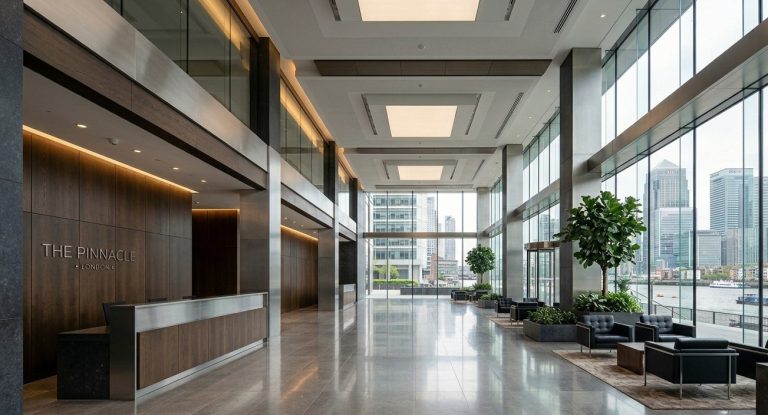
I’ve lost count of the number of times I’ve walked into a huge corporate lobby at six in the morning, looked around, and thought, “Alright… this place needs rescuing.” Those vast entrances never stay clean for long. Staff march through in waves, clients wander about with coffee, couriers drag in rainwater, and someone always manages to leave fingerprints on a surface I polished only hours earlier. Lobbies and reception desks carry the pressure of being the company’s face, so they need far more care than most people realise.
I’ve seen visitors make snap decisions based on a faint mark on a glass panel or a ruffled mat near the door. I’ve watched reception teams fight clutter all day as if the desk attracts bits and pieces through magic. I’ve also met clients who assumed one cleaner could keep a 200-square-metre lobby spotless through rush hour, which made me laugh louder than I probably should have. Nothing tests a cleaner’s skill and stamina quite like a corporate entrance, and that’s why I enjoy writing about them. There’s a rhythm to these spaces. Once you understand that rhythm, cleaning becomes far smoother, calmer, and far more reliable.
This guide walks through everything that keeps a corporate lobby and reception desk looking sharp. It’s shaped by years of London office work, where surfaces are expensive, footfall is relentless, and first impressions decide everything.
The Daily Realities Of High-Traffic Corporate Lobbies
Footfall Patterns And Why They Matter
Every lobby has its own personality, and most of that comes from footfall. Morning rush hour hits like a tide. Floors collect grit, mats get soaked, and glass doors turn cloudy with fingerprints within minutes. The quiet period mid-morning gives cleaners a chance to sweep, wipe, and reset everything before lunchtime brings its own wave of chaos. Late afternoon often brings a heavy mix of staff heading home and visitors heading in.
Cleaning plans make sense only when you track those rises and falls. I’ve had buildings where the busiest time wasn’t nine in the morning but two in the afternoon when client tours overlapped. Knowing these rhythms means you plan your tasks in the right order, so the space always looks controlled and impressive.
Materials That Demand Special Care (Marble, Glass, Metals, And Textiles)
Many large firms love marble floors because they look grand. Marble also shows every spill, scuff, and drip. Wrong products can dull it faster than you’d believe. Glass needs constant attention because fingerprints appear even when nobody seems to have touched the panel. Brushed metal picks up every smudge. Textiles—often seating areas or acoustic panels—catch dust and trap odours.
I’ve worked with buildings where a single wrong spray left a cloudy trail on a stainless steel lift door. I’ve also seen marble go patchy from harsh chemicals. You treat each surface with respect, pick the right tools, and test products before committing.
How To Keep Reception Desks Looking Sharp And Professional
Clutter Control And Staff Habits
Reception desks might be the toughest spots in any corporate building. They attract objects the way my hoover attracts pet hair. Passes, envelopes, takeaway cups, visitor packs, delivery notes, pens, and the odd purse or laptop charger all end up there within minutes. Cleaning doesn’t change much unless you also look at habits.
I’ve pulled staff aside many times to talk through small changes that keep the desk calmer. Simple trays for passes, hidden storage for stationery, and a rule that cups never sit on the counter can transform the whole look. Once habits become tidy, cleaning becomes a breeze. Without that, you chase the same clutter every day.
Sanitising High-Touch Areas Without Leaving Streaks
Screens, card terminals, desk phones, tablets, and sign-in pads need regular sanitising, yet one wrong cloth leaves streaks everywhere. Hard water marks can ruin the look of a glossy counter. I’ve seen cleaners wipe a curved reception desk top to bottom, only for the sun to hit it at an angle and reveal every smear.
I learnt early on that the trick lies in light touches, microfibre cloths, and products that dry fast. The desk has to look clean and feel smooth without that cloudy film some sprays leave behind.
Floor Care That Keeps The Whole Space Looking Fresh
Matting Systems That Actually Work
Strong matting is the hero of any entrance. I used to work in a building near Moorgate where the matting saved the marble floor from constant rainwater damage. Good mats trap grit and moisture before they spread where visitors walk. The mats must be long enough for several steps, heavy enough to stay flat, and tough enough to handle umbrellas, trollies, and anything else thrown at them.
Daily, Weekly, And Monthly Floor Tasks
Floors need a layered approach. Daily work handles the basics—quick sweeps, spot mops, and checks for spills. Weekly polishing or machine cleaning keeps the shine. Monthly deep work restores areas that suffer heavy wear. I’ve had to do overnight jobs on stone floors to bring them back to life after years of rushed daily cleaning. You treat floors like investments because that’s exactly what they are.
The Secret To Smudge-Free Glass, Mirrors, And Partitions
Fingerprints And The Psychology Of Shine
Shiny surfaces send a message. When glass panels look crisp and bright, visitors assume the building is well cared for. When they spot fingerprints, their eyes catch every flaw after that. I’ve often watched people check their hair in a glass panel while passing through. Their forehead presses on the surface, they lean in, and just like that, the panel needs attention again.
Tools And Methods That Save Time
Fast cleaning comes down to having the right kit. Microfibre cloths for edges, long squeegees for full-length panels, and sprays that evaporate cleanly. I can finish a glass wall in half the time it took me in my early years, just because I learnt which tools glide and which only drag.
The Role Of Technology, Security, And Building Staff In Keeping Entrances Clean
Communication Between Cleaners, Security Teams, And Receptionists
I’ve always said the lobby runs well only when the teams talk to each other. Security sees spills on CCTV before anyone else. Reception hears about messy deliveries. Cleaners know which areas need the fastest turnaround. A quick message on the building radio saves hours of surprise work later.
Using Sensors And Smart Systems To Spot Dirt Early
Some buildings track footfall with sensors. Others use door counters to monitor peak times. These tools help cleaners predict when the entrance will need a reset. I worked in one skyscraper where we used the data to plan micro-cleaning sessions between visitor groups. It saved the lobby from ever slipping into mess.
What Deep Cleaning Looks Like For Corporate Lobbies
Periodic Furniture, Lighting, And Vent Work
Seats, cushions, tall lamps, and ceiling vents gather dust quietly. They make the whole space look tired when ignored. I’ve pulled filters from vents and watched clumps of grey fluff fall out like ancient artefacts. Periodic steam cleaning for soft seating keeps smells away. Tackling tall lighting stops cobwebs from creeping into sightlines.
Out-Of-Hours Cleaning For Busy Buildings
Night work gives cleaners the freedom to run machines without dodging foot traffic. I’ve done floor polishing at midnight in buildings with glass walls fifteen metres tall. Out-of-hours access means you reach awkward corners, clean behind security desks, and reset the whole place for morning visitors.
Common Mistakes That Make Corporate Entrances Look Unprofessional
Rushing The Metal Work
Metal creates a make-or-break moment. A single streak on a lift door tells visitors the cleaning has been rushed. Handles, trims, queue posts, and door frames need time, the right product, and a slow, steady hand. Every cleaner learns this the hard way.
Forgetting The Micro-Dust Zones
Skirting boards near the entrance gather dust faster than anywhere else. Lift call buttons collect crumbs and skin oils. Card readers grow sticky. Plant pots hold a band of dust where the soil meets the rim. These tiny areas shout “unfinished” when skipped.
How To Build A Cleaning Schedule That Actually Works
Balancing Peak Times And Off-Peak Detail Work
Schedules that ignore footfall fail every time. I’ve worked in places where cleaners were told to mop at eight in the morning while crowds poured in. You plan your detail work for quieter times and keep fast-response tasks ready for the busy periods.
Clear Task Rotation For Large Cleaning Teams
Large buildings often have teams with overlapping duties. Clear rotation stops tasks from getting missed. One person handles floors, one handles metal, one handles desks, one checks glass, and they rotate weekly so nobody burns out.
Cost, Time, And Realistic Expectations For Corporate Clients
Why High Standards Need Adequate Resources
Cleaners can perform miracles, but they can’t do them with half the hours needed. Large lobbies take time. Reception desks need touch-ups through the day. Floors need proper machine time. When companies cut hours, standards fall, and visitors notice. I’ve had hard chats with managers who wanted five hours of work done in two.
Value For Money Through Preventative Cleaning
Preventative work saves money in the long run. Strong matting stops floor damage. Regular glass work prevents scratches from built-up grime. Weekly metal polishing stops corrosion. Small, steady tasks keep big repairs away.
…
How Much Time Does It Really Take To Clean A London Office?
I’ll tell you straight away: cleaning a London office takes anywhere from 30 minutes to several hours, depending entirely on its size, layout, condition and what you expect from your cleaner. If you want a quick vacuum, a bin change, and the loos wiped down, then you’re looking at the faster end. But if you’re after gleaming desks, spotless kitchens, and a proper deep clean, then clear the calendar.
I once got called in to clean a “small office in Shoreditch” – the manager said it wouldn’t take more than an hour. I turned up, mop in hand, and found three rooms, two toilets, a full kitchen, and a staff area that looked like it hadn’t seen a cloth since the week before Christmas. Took me four hours, not one. But here’s the thing: the client didn’t realise how much grime had built up until I showed him the before-and-after shots.
So, how much time does it really take? You’ve got to look beyond just the square footage. You’ve got to think about the number of rooms, foot traffic, whether it’s a creative space or a quiet admin floor, and how picky your staff are about crumbs in the keyboard tray. In this article, I’ll walk you through exactly how long different types of offices take to clean in London, and what you should consider when setting a schedule that works for your team – and your cleaners.
Is There a Formula for Working Out Cleaning Time?
Square Footage Can Help, But It’s Not the Full Story
You might be tempted to do some quick maths. A lot of companies use a basic estimate: about 1 hour per 1000 square feet for regular cleaning. But in reality, that’s just the starting point.
Think of it like measuring how long it takes to cook dinner based on how many potatoes you’ve got. Sure, it gives you a rough idea, but it doesn’t take into account whether you’re making a jacket spud or dauphinoise.
Here’s why the formula doesn’t always work:
- Open-plan vs. many rooms – a big open space is faster to clean than lots of small ones.
- Foot traffic – a quiet firm of four people is nothing like a bustling agency with 40 staff.
- Cleanliness levels – some offices keep things tidy, others treat the cleaner like damage control.
If you really want to get it right, you need a walk-through with your cleaner or cleaning company. That way, you can talk about expectations, budget, and the actual time needed – rather than guesswork based on square metres.
Cleaning a Small Office – What’s Reasonable?
A One-Room Setup or a Cosy Shared Space
Small offices are usually around 300–800 square feet – often one room, maybe with a loo and a kitchenette. Think start-ups, therapists, freelancers sharing a space – that sort of thing.
For a standard clean (think hoovering, wiping down desks, emptying bins, a once-over in the kitchen and bathroom), you’re looking at about 30 to 60 minutes. If you’ve only got a handful of people using the space, twice a week might be enough.
But here’s where people go wrong: kitchens and toilets always take longer than you think. I’ve had 300 sq ft offices take 90 minutes purely because the microwave looked like a Jackson Pollock painting and the toilet bowl was a chemistry experiment.
Set realistic expectations. If your cleaner’s flying through a “30-minute” job in 15, either they’re missing corners or your space is spotless – and let’s be honest, the second one’s rare in London.
Mid-Size Offices – The Reality of Cleaning Multiple Rooms
More People Means More Mess, and More Time
Now we’re talking about offices between 800 and 3000 square feet. These often include a reception area, meeting room or two, staff kitchen, a couple of toilets, and a main work area.
Here, the time needed starts climbing. A typical clean could take 90 minutes to 3 hours, depending on the layout and how many people are using the space. If you’ve got different departments with their own rooms – HR, finance, creatives – expect extra time for each section.
More rooms = more surfaces, and more chances for someone to leave a half-eaten croissant on a windowsill. I cleaned an office in Soho with only 12 desks, but it had four rooms, two bathrooms, and a full break area. Took two hours even with me working non-stop.
Scheduling Tips for Mid-Size Offices:
- Daily cleans usually needed if more than 10 staff are in full-time.
- Kitchens and meeting rooms benefit from a quick lunchtime refresh.
- Keep a cleaning log – this helps staff respect the schedule and flag any problem areas.
Large Corporate Premises – Timing and Logistics
Whole Floors, Dozens of Staff, and Big Cleaning Needs
This is where things get serious. If you’re in charge of a large office space or full floor – anything 3000 square feet and up – cleaning turns into a well-oiled operation. Or at least it should be.
Here’s what makes a difference:
- Number of staff: more people = more bins, more toilet flushes, more footprints.
- Layout: glass walls and boardrooms take more polishing time than carpet tiles and cubicles.
- Usage: some floors host events, others are strictly for admin – the cleaner’s task list changes massively.
A proper daily clean for a large floor can take 3 to 5 hours, sometimes longer. That’s why many firms schedule this work out of hours – early morning before staff arrive, or evenings after everyone’s gone.
Cleaning Shifts & Coordination:
- Early morning shifts (5am–8am) are popular, especially in the City.
- Evening cleans (6pm onwards) give more time, but may clash with late-working staff.
- Some big firms opt for day porters – on-site cleaners handling small messes through the day.
If you’re hiring for a large site, go with a team rather than one cleaner – otherwise, you’ll be paying someone to do 6-hour marathons that aren’t sustainable.
Features That Affect Cleaning Time
It’s Not Just the Size That Matters
Let’s talk extras – because these can throw your timing off completely if you don’t plan ahead.
Do You Supply Janitorial Products?
Some clients expect cleaners to bring everything – mops, vacuum, sprays, bin liners – while others provide it all on-site.
If your cleaner has to lug everything across London, that adds time before they even start. Make sure you’re clear on what’s expected.
Office Location
London traffic is no joke. I’ve had jobs where the commute takes longer than the clean. If your office is tucked away in a restricted access area or has awkward parking, it may limit when and how cleaners can work.
Special Requests
Here are a few that need extra time:
- Deep cleaning carpets or upholstery
- Sanitising keyboards and phones
- Window cleaning inside and out
- Post-event clean-ups
If you need those done regularly, build them into the schedule. Don’t spring them on your cleaner the minute someone spills red wine on the breakroom carpet.
Final Thoughts – How to Plan Your Cleaning Schedule
Set Yourself Up for Success
The best thing you can do is speak with your cleaning provider about what you need, how often, and what’s realistic for your space. Don’t base your schedule on what worked in your old office or what a mate’s business does. London offices vary massively, and so do cleaning times.
Here’s a quick cheat sheet:
- Under 500 sq ft – 30–60 mins
- 500–1500 sq ft – 1–2 hours
- 1500–3000 sq ft – 2–3 hours
- 3000+ sq ft – 3–5 hours or more
But always factor in the people, the mess, and the expectation. If you want sparkling worktops, polished floors, fresh-smelling loos and happy staff, give your cleaners enough time to do their job properly.
Because there’s nothing worse than rushing a clean. Except maybe that office in Shoreditch with the science-experiment loo. That one still haunts me.…
How to Properly Clean Office Equipment: Maintaining Computers Printers and More
In today’s fast-paced office environment, you need to keep your equipment clean and well-maintained for optimal performance. Regular cleaning is crucial for computers, laptops, printers, and scanners to ensure they last long and work efficiently.
Our leading experts will give you a comprehensive guide on the tools and materials you need, step-by-step instructions for cleaning your office equipment, and tips on preventing the need for frequent cleaning. Follow these guidelines, and your office equipment will be health-safe and clean permanently!
Importance of Regular Cleaning
Regularly cleaning your office equipment is crucial for maintaining peak performance, extending equipment longevity, and ensuring a hygienic and productive office environment. Stick to proper cleaning routines to prevent the buildup of dust and grime, which can mess with your equipment’s functionality and make your workspace less germ-free.
When you clean office equipment regularly, you boost its efficiency and contribute to a healthier workplace. Getting rid of dust from computers, printers, and other devices helps prevent overheating and potential malfunctions, keeping things running smoothly. Sanitising practices like wiping down surfaces and disinfecting keyboards can reduce the spread of germs among employees, leading to fewer sick days and a productivity boost.
And hey, a clean office doesn’t just stop at equipment – it sets the stage for a positive atmosphere that supports employee well-being and motivation. So, keep that cleaning routine going!
Tools and Materials Needed
You’ll need a few essential tools and materials to clean your office equipment like a pro. Make sure you have cleaning cloths, screen cleaners, and dust removal tools on hand. Having these crucial supplies at your disposal will help you safely and effectively clean all your equipment without risking any damage or loss of performance.
Essential Supplies for Proper Cleaning
Having the right supplies is crucial for keeping your office equipment spick and span. You’ll need cleaning cloths, screen cleaners, and effective cleaning solutions to make sure your gear stays in tip-top shape and works like a charm.
Cleaning cloths are necessary for wiping down surfaces like monitors and keyboards and removing dust and smudges. Screen cleaners are your go-to for keeping computer screens free from fingerprints and dust, ensuring a crystal-clear display. Make sure you use cleaning solutions tailored to specific materials, like electronics or glass, to avoid damage and keep your equipment in top shape.
Using the right products for each surface is vital to preventing harm or unsightly streaks. By splurging on quality cleaning supplies, you’ll make your office equipment look great and create a healthy and productive work environment.

Cleaning Computers and Laptops
Taking good care of your computers and laptops is critical to keeping them running smoothly for the long haul. Make sure you give them some regular TLC, like cleaning your keyboard and wiping down your monitor. This can reduce dust and grime buildup and boost your equipment’s performance.
Step-by-Step Guide for Cleaning
- Follow this step-by-step guide for cleaning your computers and laptops, starting with dust removal and progressing to keyboard and monitor cleaning. Using the right cleaning tools and techniques will ensure thorough and safe cleaning.
- To begin, use a can of compressed air or a handheld air blower to carefully blow out dust and debris from your computer or laptop’s vents and fans. Remember to hold the can or blower upright to prevent liquid from escaping.
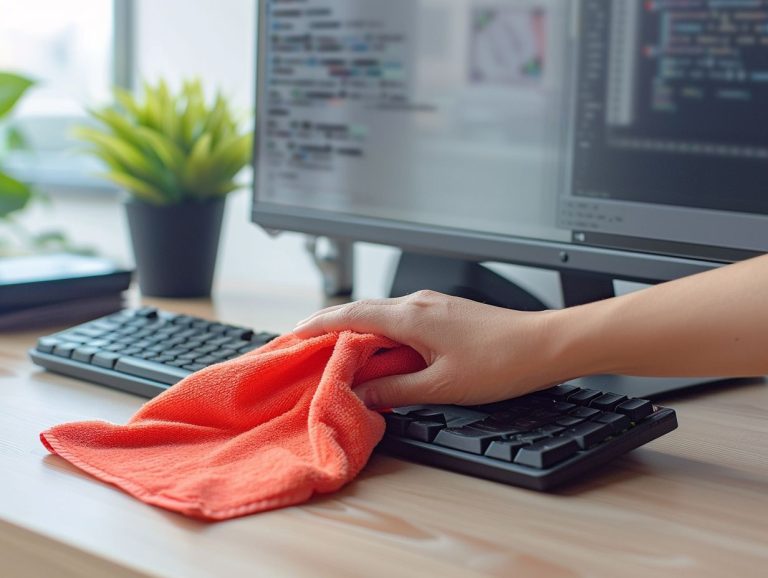
- Next, gently wipe down the exterior of your device using a soft microfiber cloth dampened with a mild cleaning solution. For the keyboard, you can use a small brush or compressed air to dislodge debris between the keys, then wipe it down with a disinfectant wipe.
- When cleaning the monitor, remember to use a gentle screen cleaner or a mixture of water and vinegar on a microfiber cloth to avoid damaging the display surface.
Cleaning Printers and Scanners
Regarding keeping your printers and scanners in top condition, don’t cut corners on cleaning. Regular maintenance is crucial to ensuring they endure. Take the time to clean out the printer paper tray and other components – it’ll help avoid those irritating problems and keep your office technology running smoothly like a well-oiled machine.
Best Practices for Maintaining Office Equipment
Adopting best practices is the key to keeping your office equipment in top condition. Make sure you regularly carry out preventive maintenance and use effective cleaning techniques. Keeping your equipment clean and well-maintained is crucial for enhancing its performance and prolonging lifespan.
Remember to regularly inspect your equipment for signs of wear and tear. Dealing with minor problems promptly can prevent them from escalating into major issues later on. When it’s time to clean, ensure you’re using the appropriate cleaning products for each type of equipment. For delicate electronics such as computers and printers, stick to microfiber cloths and electronic-safe cleaners to avoid any damage.
Establishing a schedule for maintenance checks and cleaning sessions promotes a sense of care and responsibility among your office staff. This maintains your equipment in excellent condition and ensures a longer life.

Cleaning Other Office Equipment
Regarding keeping your office clean, don’t forget about the other equipment like phones, copiers, and all those things you use every day. Regularly dusting and disinfecting these items is critical to keeping the office germ-free and ensuring a healthy work environment.
Tips for Cleaning Phones, Keyboards, and More
When cleaning phones, keyboards, and other items you touch frequently, it’s key to follow the right cleaning steps and choose the proper disinfectants to keep things super clean without messing up your gear.
You can easily keep these gadgets clean by regularly wiping them down with a soft, microfibre cloth that’s a bit damp and a gentle disinfectant solution. Just stay away from harsh stuff like bleach or ammonia, as they can mess up the coatings on your devices.
For keyboards, grabbing some compressed air to blow out the dust and gunk between the keys can prevent any nasties from building up. And don’t forget to unplug things before you get cleaning to avoid any electrical oopsies.
By incorporating these simple cleaning tricks into your routine, you’ll have a germ-free workspace, and your office gear will stay in tip-top shape for longer.

Preventive Measures for Maintaining Office Equipment
To keep your office equipment running smoothly for longer, take preventative steps. Setting up a regular maintenance schedule and following the best practices for equipment upkeep can help extend your office technology’s durability and lifespan.
How to Minimise the Need for Cleaning
Implement preventative maintenance practices and take good care of your equipment to minimise the need for frequent cleaning. By keeping your equipment clean and addressing problems immediately, you can reduce how often and how thoroughly you need to clean.
Ensure you regularly check your equipment for any signs of wear or issues to detect them early and prevent any accumulation. Using high-quality cleaning products and following the manufacturer’s guidelines will help you clean effectively without causing any damage.
Establish a schedule for regular maintenance tasks such as changing filters or lubricating parts. This will help your equipment last longer and prevent dirt and debris from accumulating. Taking a proactive approach to caring for your equipment will lead to a cleaner and more efficient workspace for you.…
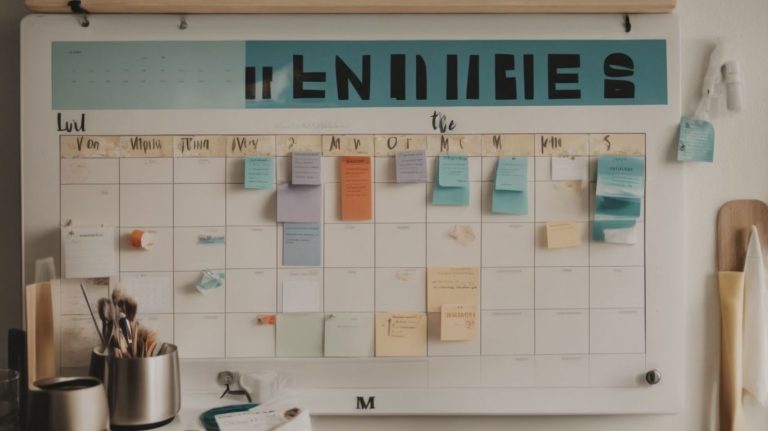
How To Create A Janitorial Supply Schedule For Large Corporate Premises
Are you responsible for managing the cleanliness of a large corporate premises? Creating a janitorial supply schedule ensures the space remains clean and well-maintained.
In this article, we will discuss the importance of a janitorial supply schedule, how to create one for large corporate premises, and how to maintain and update it effectively. Following these steps and tips, you can streamline the cleaning process and ensure your premises are always in top condition.
What is a Janitorial Supply Schedule?
A Janitorial Supply Schedule outlines the timing and details of cleaning tasks, including the inventory of cleaning supplies required for maintaining workplace cleanliness.
By establishing a structured routine for cleaning responsibilities, this schedule helps ensure that all areas are consistently maintained to high standards.
Task rotation within the schedule can prevent monotony and maintain efficiency, allowing for thorough cleaning of different areas during each cycle.
Tracking the inventory of cleaning supplies through the schedule aids in effective management. It ensures that necessary products are continuously replenished on time to avoid any disruptions in the cleaning process.
Why is a Janitorial Supply Schedule Important for Large Corporate Premises?
A Janitorial Supply Schedule is crucial for large corporate premises to ensure cleaning efficiency and maintain high standards of workplace cleanliness.
By establishing a consistent supply schedule, the cleaning team can effectively plan and distribute resources across various facility areas, ensuring that all cleaning tasks are completed on time and with the right tools. It enhances the overall cleanliness of the premises and contributes to a healthier and more professional work environment for employees and visitors.
The schedule guides team members, helping them stay organised and focused on their specific cleaning responsibilities, ultimately leading to a more streamlined and coordinated approach to maintaining cleanliness.
How to Create a Janitorial Supply Schedule for Large Corporate Premises?
Creating a Janitorial Supply Schedule for large corporate premises involves assessing cleaning needs, determining supplies, and setting a budget for efficient cleaning operations.
- Start by conducting a detailed evaluation of the premises to identify high-traffic areas, specific cleaning requirements, and frequency of cleaning tasks.
- Once the cleaning needs are understood, select appropriate cleaning equipment such as vacuum cleaners, mops, buckets, and cleaning solutions based on the surface types and areas to be cleaned.
- Next, create a budget that allocates funds for equipment purchases, consumable supplies, and scheduled maintenance of cleaning tools.
- To ensure uninterrupted cleaning operations, keep a meticulous record of supply inventory levels, reorder points, and delivery schedules.
Assess the Cleaning Needs of the Premises.
Assessing the cleaning needs of corporate premises is the first step in creating an effective Janitorial Supply Schedule, involving the development of a comprehensive cleaning checklist.
This checklist is crucial in ensuring that all areas of the premises are thoroughly cleaned and maintained according to specific standards. It outlines tasks such as dusting, vacuuming, mopping, and sanitising areas such as offices, restrooms, and common areas.
Each task is assigned a frequency, from daily routines to weekly or monthly deep cleaning tasks. By detailing these cleaning procedures and work assignments in the checklist, cleaning staff can efficiently plan and prioritise their tasks, leading to a consistently clean and hygienic environment for employees and visitors.
Determine the Frequency of Cleaning Tasks
Determining the frequency of cleaning tasks is essential for maintaining cleanliness and implementing task rotation strategies within the Janitorial Supply Schedule.
By establishing a consistent cleaning schedule, the team can ensure that all areas are thoroughly cleaned regularly. Task rotation is vital to prevent monotony and ensure no cleaning aspect is overlooked. Coordination among team members is crucial to divide tasks effectively and ensure that each member contributes to maintaining high cleaning standards. This approach promotes efficiency and enhances the overall cleanliness of the environment, creating a more pleasant and hygienic space for everyone.
Identify Necessary Cleaning Supplies
Identifying the necessary cleaning supplies involves inventory management strategies to ensure workplace cleanliness and adherence to cleaning protocols.
By maintaining a well-organised inventory of cleaning supplies, businesses can efficiently track stock levels, monitor product expiry dates, and ensure compliance with sanitation standards. This process involves categorising supplies based on their purpose, such as disinfectants, wipes, and gloves, to streamline cleaning processes and reduce the risk of cross-contamination.
Regular audits of cleaning supplies also help identify gaps in inventory and restock essential items before they run out, thus enabling the smooth running of daily cleaning operations.
Determine the Quantity of Supplies Needed
Determining the quantity of supplies needed is crucial for optimising cleaning efficiency and ensuring seamless operations within the Janitorial Supply Schedule.
To accurately calculate the required quantity of cleaning supplies, one should first assess the facility’s size, frequency, and the specific cleaning tasks.
An efficient inventory tracking system can help monitor stock levels and predict when supplies need replenishment.
It is also essential to consider the type and quality of cleaning solutions to ensure effective cleaning while minimising waste.
By carefully managing these factors, janitorial staff can enhance productivity and maintain a clean and hygienic environment.
Create a Budget for Janitorial Supplies
Establishing a budget for Janitorial Supplies involves carefully allocating resources and exploring cost-effective solutions to manage cleaning expenses effectively.
One critical aspect of budgeting for janitorial supplies is conducting a thorough analysis of the cleaning operations to determine the frequency and quantity of supplies needed. By understanding the specific cleaning requirements of different areas within the facility, you can tailor your budget to prioritise essential supplies while minimising wastage. Leveraging data from previous supply usage can help forecast future needs and prevent overstocking or shortages. Implementing a system for tracking expenses and monitoring inventory levels is crucial to ensure efficient resource allocation and cost control.
Consider the Storage and Organization of Supplies
Adequate storage and organisation of cleaning supplies are essential for the Janitorial Supply Schedule, requiring efficient inventory tracking for seamless operations.
Proper storage and organisation of cleaning supplies ensure that the right products are readily available when needed and contribute to a cleaner and safer work environment. By implementing systematic inventory tracking procedures, cleaning crews can accurately monitor stock levels, prevent wastage, and replenish supplies on time. This level of organisation can lead to increased productivity and cost savings for the cleaning service provider. Advancements in cleaning technology, such as automated inventory management systems, can further streamline the process and enhance overall efficiency.
Develop a Schedule for Ordering and Restocking Supplies
Developing a schedule for ordering and restocking supplies is crucial for maintaining continuous supply availability and efficient inventory management within the Janitorial Supply Schedule.
By setting up a structured timetable for procurement, organisations can ensure that essential cleaning supplies are constantly maintained, thus avoiding disruptions to daily cleaning operations. This process involves analysing historical consumption patterns, current inventory levels, and upcoming cleaning requirements to forecast precise ordering quantities. Efficient supply chain management plays a pivotal role in streamlining the flow of cleaning products from suppliers to storage areas, ensuring that stock levels are optimised while minimising excess or surplus inventory. Adhering to a well-thought-out schedule also helps implement cost-effective strategies, such as bulk purchasing or leveraging discounts with preferred vendors.
Consider Outsourcing Services for Certain Tasks
Outsourcing services for specific cleaning tasks can optimise resource allocation and enhance the efficiency of the Janitorial Supply Schedule by leveraging external expertise.
Outsourcing cleaning tasks such as carpet cleaning, window washing, and deep floor cleaning to specialised service providers allows businesses to focus on core operations while ensuring that all cleaning needs are expertly met. By delegating these tasks, companies can allocate their internal resources to more strategic initiatives, ultimately improving productivity and cost efficiency. Outsourcing enables proper supervision of cleaning activities, ensuring that tasks are prioritised based on their importance and frequency, thus enhancing overall cleanliness and hygiene standards within the workplace.
How to Maintain and Update the Janitorial Supply Schedule?
Maintaining and updating the Janitorial Supply Schedule involves regular reviews, adjustments to cleaning schedules, and incorporation of maintenance tasks to ensure optimal performance.
By conducting routine cleaning audits, it becomes easier to identify discrepancies or areas that need improvement within the schedule. Quality control measures are essential in maintaining high standards of cleanliness and efficiency. These audits help assess the effectiveness of the cleaning procedures and ensure that all necessary supplies are stocked.
Regular reviews also allow for modifications based on feedback from staff and any changing requirements. This continual process not only enhances the overall cleanliness of the facility but also contributes to a safer and healthier environment for occupants.
Tips for Effective Implementation of the Janitorial Supply Schedule
Effective implementation of the Janitorial Supply Schedule requires attention to cleaning performance, customer satisfaction, and adherence to cleaning guidelines for optimal outcomes.
To enhance cleaning performance:
- Ensure that all janitorial supplies are well-stocked and easily accessible for staff.
- Regularly inspect and maintain cleaning equipment to guarantee efficiency and longevity.
- Encourage team members to follow proper cleaning protocols and procedures to maintain a high standard of cleanliness.
Monitoring customer feedback and promptly addressing any concerns can significantly enhance customer satisfaction. By staying informed about the latest cleaning compliance standards and best practices, you can ensure that your janitorial team operates by industry guidelines and regulations.…

“Just Like In The Movies”: An Office Cleaning Adventure in the City
Whenever I meet someone new or have to introduce myself and mention that I am an office cleaner, most people imagine large corporate headquarters, bustling office floors with computers and phone chatter or the glitzy marble-lined interior of international conglomerates. My professional routine is much less glamorous. 95% of my company’s customers are small-scale or start-up businesses accommodated in shared workplaces, renovated apartments or small office buildings. Disappointing as it may sound to some of my friends and relatives, the office cleaning I do is much closer in scope and task range to home cleaning than what they imagine.
However, there are the other 5% of our cases, and one of them will be the topic of this post. It happened a few years ago, before the pandemic and the Brexit debacle, in the golden years of London as one of the financial capitals of the world. I was already an experienced office cleaner with regular customers. Still, the biggest job I had ever done was for a small printing company in Kensington – 12-15 employees, taking up a few rooms on the second floor of a renovated office building on Sloane Avenue. So, nothing had prepared me for the bolt out of nowhere I was about to receive.
I should have seen the signs earlier, but I am the kind of guy who doesn’t pay attention to what happens in the office. There was some hushed murmur in the call room, but I attributed it to the inevitable office gossip. A few days later, Jack, one of the other crew leaders, met me in the staff room. “Hey, did you hear the big news? We’ve gotten a quote request from a real City shark, a stock brokering firm! It could be the biggest job we’ve ever done!”
So that’s what all the noise was about! Still, since I had no part in the marketing or customer interactions, I pushed the news to the back of my head and continued with my ongoing tasks. However, by the end of the week, the tension in the office was palpable. It wasn’t a bad kind of tension – more like the expectation before a big match for your favourite team. Finally, my boss called me on Friday.
“Lee, I am sure you’ve already heard the rumours. We didn’t want to blow the whistle before finalising the deal, but it is now in the books! I need you to come to the office tomorrow so that we can plan the whole thing.”
How did we get the job? Our customer was a successful investment firm specialising in volatile stock-market assets – playing the high-risk, high-reward game to perfection. They had a long-term relationship with a well-established office cleaning contractor. However, several highly sensitive documents had disappeared from one of the offices a few weeks prior. It turned out there had been no foul play – just one of the cleaners threw the papers out without looking at them. While the damage was non-existent (the documents were easily recovered digitally), the incident fractured the relationship with the office cleaning contractor.
The firm was running a competition between several prospective replacements, and we had to serve as a stop-gap until they made their final decision. Again, it might not sound glamorous, but we were realistic back then – we had neither the equipment nor the experience or manpower to take on such an assignment. We planned to employ two full crews for the daily cleaning – Jack’s team was going to clean the offices, the main salon, the single working stations, the office equipment and the conference room. My crew had to take on the tougher assignment – the washrooms and the lobby, the floor cleaning and the interior window polishing, plus taking care of the janitorial supplies. We were scheduled to clean for three hours – between 8 and 11 PM – from Monday to Friday for one week.
“There is a bonus”, said my boss with a smile. “You are going to clean the 21st floor of the Gherkin, so if you ever wondered what the view from up there is, now you will find out!” A bonus indeed! The Gherkin was one of the most iconic, cucumber-shaped skyscrapers in the heart of the City. Cleaning one of its floors promised to be one of the highlights of my career.
I rarely get giddy about a job, but I couldn’t wait for Monday to come. I had delegated all ongoing tasks to other crews and drilled my team on the importance of efficiency and attention to detail. Finally, at about 6:30 PM, I took the Underground to Bank Station. The City was offloading its vast reservoir of bankers, lawyers, corporate sharks and hedge fund wizards. I could hardly feel more out of place as I was walking up Leadenhall Street. Little did I know that my evening was about to get even more surreal.
The Gherkin lobby was enormous and looked like the cavernous interior of a spaceship in its chrome and grey colours. I had to remind myself constantly not to be gawking like a schoolboy, but everything around reminded me of a movie set. When the doors of the slick elevator opened at the 21st-floor platform, I almost expected Jordan Belfort to invite us to a Wolf of Wall Street-style orgy.
Disappointingly, the offices were already half empty. I could switch back to my usual self and start giving instructions to my team. We had a lot of work to do, but I could not restrain my curiosity. Jack’s crew was already sweeping through the main salon, which looked like an exact replica of the Big Short or Margin Call sales salons – trade quotes flashing on the linear screen, piles of nervously crunched papers, the smell of testosterone, ego, and neurotic desire to win at all costs still filling the air. I wish I could see the salon in all its glory, with thirty or forty brokers shouting in their receivers – but I had a job to do.
“Weren’t you guys supposed to start cleaning at 8 PM?” The sharp question brought me out of my trance. I turned around immediately to face a clean-shaven gentleman in his mid-forties. The three-piece suit, the self-confident look and the steel look in his eyes reminded me of a more gentrified Gordon Gekko (I could not escape the movie comparisons).
“It is ten past eight, sir”, I responded as politely as I could without sounding too servile. He absent-mindedly looked at his watch (Rolex, Omega?) and dropped an F-bomb. “My wife is going to murder me for this!” He ran back to his office to grab his jacket.
I couldn’t help but smile. How often have I said the same thing, running late after work? This fleeting encounter helped me regain my composure. Yes, the office we had to clean looked as if Bobby Axelrod was going to turn around the corner. But the people working there were just like me and Jack and any of our cleaners. Well, maybe a little better paid.…
London Office Cleaning Competition is Healthy
We Love Cleaning Competition
Throughout the years of cleaning offices, industrial premises, shops and all other sorts of commercial cleaning contracts, we at ManMade Office Cleaning (MM Office Cleaning) have accumulated a great amount of experience. Servicing commercial buildings and looking after the cleaning maintenance at those sites developed us froma small one-man-band cleaner-operator to a big (well not national yet) soft services (a.k.a support services cleaning company) servicing not just London but parts of the Home Counties as well – Buckinghamshire, Berkshire, Middlesex, Surrey, Kent, Essex, Cambridgeshire and Hertfordshire.
In other words – we can provide office cleaners in most parts of the South East areas surrounding Greater London.
As you have noticed we have been rebuilding our website for a while, and we appreciate your patience. As they say, ‘Good things come to those who wait.’ In this tone of words we would like to announce that our technical contractors are putting the finishing touches to the website and you will see it very soon in its modern glory.
Our Support Services Company is Already Taking on London Based Cleaning Contracts
Of course, you can always get in touch with us before that, by submitting a commercial cleaning request through our Contact Page.…